
NAHE, GERMANY | 2022
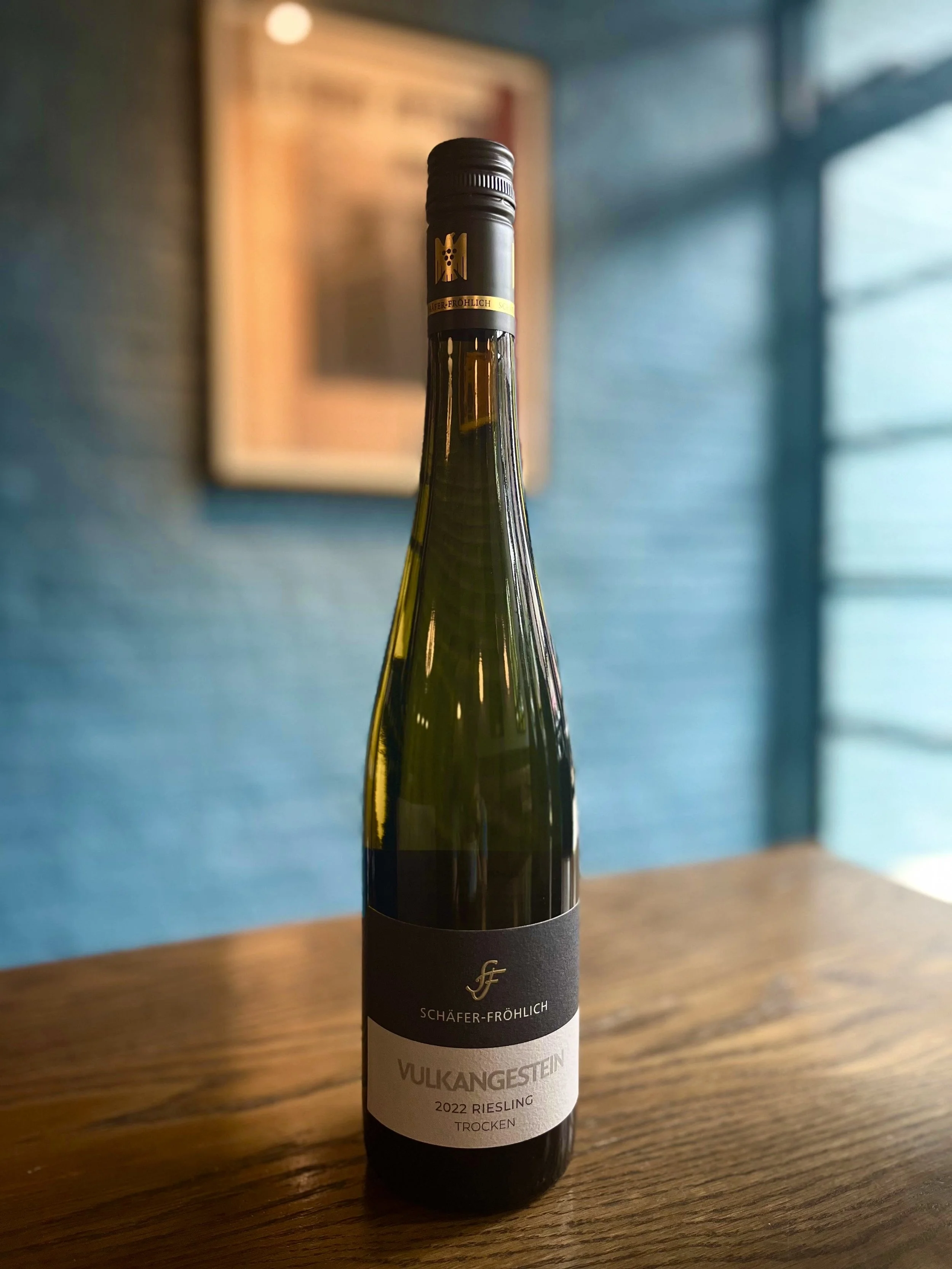
One of the things I love most about Riesling is its extraordinary ability to communicate the place where it's grown, and few producers demonstrate this better than Schäfer-Fröhlich. Located in the village of Bockenau in Germany's Nahe region, this historic family estate has become one of the country's most celebrated producers of dry Riesling under the leadership of winemaker Tim Fröhlich. The Nahe is a particularly fascinating region, with an extraordinarily diverse geological landscape shaped by ancient volcanic activity and millions of years of tectonic movement. Its vineyards contain everything from slate and quartzite to sandstone and volcanic rock, allowing Riesling to express dramatically different personalities depending on where it's planted. While the Mosel often produces Rieslings celebrated for their delicacy, the finest Nahe examples combine that same elegance with remarkable concentration, structure, and an almost electric mineral intensity.
The name Vulkangestein literally translates to "volcanic rock," and that's precisely what makes this wine so exciting. The 2022 comes from approximately 20- to 30-year-old vines in two exceptional vineyard sites, Felsenberg in Schlossböckelheim (gesundheit!) and Stromberg in Bockenau, both associated with the estate's prestigious Grosses Gewächs bottlings, Germany's equivalent of dry grand cru wines. Essentially, you're getting a glimpse into some of Germany's finest vineyard terroirs without the considerably higher price tag! Stylistically, this is a beautifully focused, bone-dry Riesling offering vibrant aromas of lemon zest, green apple, white peach, and delicate florals, accompanied by hints of smoke, crushed stone, and savory herbs. The palate is wonderfully energetic, with piercing acidity, subtle richness, and a salty, mouthwatering finish that seems to linger indefinitely. At just 12% alcohol, it's a remarkable example of how a wine can possess tremendous character and complexity without relying on ripeness or weight. Although delicious now, its structure and acidity should allow it to develop beautifully over the coming years.
For the Thanksgiving table, I can't think of many wines more versatile than a great dry Riesling. With so many rich, savory, and occasionally sweet dishes competing for attention, the vibrant acidity and mineral character of this wine provide a wonderful counterbalance. It's particularly delicious with roasted turkey, especially white meat, while its citrus notes and subtle salinity complement everything from sage stuffing and buttery mashed potatoes to roasted root vegetables and glazed carrots. Even richer dishes benefit from its refreshing character, making it one of those rare wines that can move effortlessly across nearly the entire Thanksgiving spread. I would recommend serving it slightly warmer than refrigerator temperature to allow its beautiful complexity to reveal itself. And if you manage to save a bottle for a few years, you'll discover just how extraordinary mature dry Riesling can become!